

The Ultimate Guide to Glass Table Tops: Types, Styles, Safety, DIY, and Buying Tips
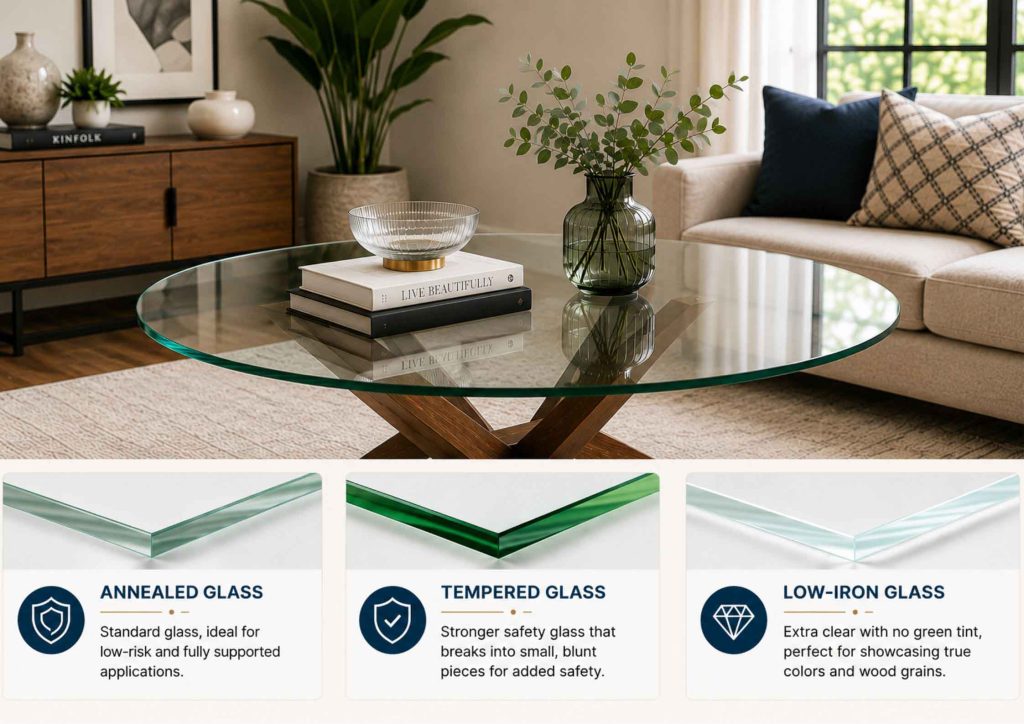
Beautiful wooden dining tables, vintage coffee tables, and office desks can quickly develop scratches, water rings, and everyday wear. A glass protective top for a table helps protect wood furniture from scratches, stains, and everyday wear while enhancing its appearance.
This blog is going to talk about how to choose the right material, thickness, and edge style, along with safety tips, accurate measuring, DIY considerations, and buying advice. It will also help you choose the right glass for your table so you can enjoy a surface that’s both practical and built to last.
| Order Your Custom Glass Table Top – Call 916-944-7179 |
What Are the Different Types of Glass for Tabletops?
Custom glass tops for tables are available in different shapes, thicknesses, and edge finishes to suit both homes and businesses.
Choosing the correct glass type is important for both durability and safety. The wrong choice can result in frequent breakage or accidents in busy spaces. It is recommended to collaborate with an experienced Glass Company that helps you match glass to your exact everyday use.
-
Annealed Glass
Standard glass is a popular choice for protective glass for table tops because it sits securely on an existing wood or metal surface. When broken, it cracks into large, sharp shards, best for low-risk and completely supported applications.
-
Tempered Glass
Safety glass that is four to five times stronger than annealed glass. A tempered glass top for a table breaks into small pebble-like pieces instead of sharp shards, making it a must for standalone tables, patio tables, and heavy-use dining areas. Tempered glass is also commonly used for rectangular patio tables because it offers better strength and safety for outdoor use and is ideal for replacing broken garden or patio table glass.
-
Low-Iron Glass
Ultra-clear glass with minimum iron content to remove the natural green edge tint of standard clear glass. Best option if you want true color transmission for showcasing premium wood grains, rugs, or design elements beneath the glass.
How to Choose the Right Thickness of the Glass
The thickness of the glass for a dining room tabletop affects both the strength and the appearance of the tabletop. If too thin, it can crack; if too thick, it can become difficult to manage safely.
1. Protective Glass Covers (Sitting Directly on Furniture)
- 1/4-Inch Thickness: Industry standard for protective toppers on desks, coffee tables, and dressers. Substantial enough to stay put, slim enough to stay discreet.
- 3/16-Inch Thickness: A lighter option for smaller pieces like nightstands, accent tables, or picture frame inserts.
2. Standalone Glass Table Tops (Unsupported or Frameless)
- 3/8-Inch Thickness: Entry-level for standalone coffee tables or small kitchen tables; provides a good balance of strength and weight.
- 1/2-Inch Thickness: The preferred choice for large dining tables, executive desks, or frameless conference tables. Delivers a premium look and excellent durability.
- 3/4-Inch Thickness: A bold, luxury look designed for dramatic edges and heavy-duty structural use.
How Custom Edge Styles Impact Safety and Design
Edge treatment works for both aesthetics and the safety of the glass table. Raw edges are sharp and dangerous; every custom piece should be professionally finished by a premier Glass Company that residents can rely on.
- Seamed Edge: Sharpness is removed for safe handling, but the edge remains slightly rough. Best when the edge is completely hidden inside a metal or wooden frame.
- Flat Polished Edge: Ground flat and polished clear with a slight safety bevel on the top and bottom corners. Offers a modern look that works beautifully on standalone tables.
- Pencil-Polished Edge: Smooth, rounded profile resembling the side of a pencil. Highly popular for circles and ovals; family-friendly and safe for kids.
- Beveled Polished Edge: The Top perimeter is cut at an angle to create a decorative, sloping border (typical width 1/2 to 1.5 inches). Provides a classic, light-catching detail.
Step-by-Step: How to Measure for a Custom Glass Table Top
The custom glass layouts are exact; once cut and tempered, the piece cannot be trimmed or modified. Accurate measuring avoids expensive mistakes.
1. Decide How the Glass Will Be Used
Decide if the glass is a protective topper, i.e., fully supported, or a standalone top, bearing its own load. Identify the shape: a square, a rectangle, a circle, an oval, or a custom shape with rounded corners.
2. Measure Length and Width Carefully
To measure using a rigid steel tape measure instead of a flexible fabric one. The measurement is done at least twice to ensure consistency, and record your final dimensions to the nearest 1/16 inch.
3. Measure Rounded Corners
To extend an imaginary straight line from each side to form a 90-degree corner. To measure from that imaginary corner to where the curve actually begins, this is the distance of your corner radius.
4. Make a Paper Template for Custom Shapes
Lay a heavy butcher paper flat over the surface and trace the outline with a fine-tip marker for ovals, boat shapes, clipped corners, or complex cutouts. Then you need to provide the template directly to your specialist.
Can You Install a Glass Tabletop Yourself?
If you’re placing a glass cover on top of an existing table, you can usually do it yourself as long as the glass is the right size and you have someone to help you lift it. However, larger glass table tops, thicker glass, or custom-shaped pieces are much heavier and more difficult to handle safely. In these cases, it’s best to have a professional take the measurements and install the glass to avoid damage or injury.
If you choose tempered glass, remember that it cannot be cut or modified after it’s been tempered. That’s why it’s important to confirm all measurements, cutouts, and edge details before your order is made.
For added safety, especially in homes with children, consider polished edges and rounded corners to reduce the risk of accidental bumps or cuts.
Tips to Maintain a Glass Tabletop
- Use a mixture of distilled water and isopropyl alcohol or a non-ammonia glass cleaner, then wipe with a clean microfiber cloth.
- Do not use metal, grit-laden items, or sliding ceramic items across the surface. Instead, use soft coasters and placemats.
- Do not directly place very hot pots or pans on the glass. Always put them on protective pads. If your glass table is placed in direct sunlight, use UV-protective films or a coating.
- If you ever need to move or store the glass, keep it standing upright with padding between the glass and any hard surface. Storing it flat can put extra stress on the glass and increase the risk of damage.
Which Type of Glass Is Right for Your Project?
1. Choose Low-Iron Ultra-Clear Glass If
- You want a floating glass effect without green-tinted edges.
- You are showcasing a premium wood grain, parquet, luxury rug, or decorative inlay.
- Your space uses bright whites, light neutrals, or color-critical palettes where edge tint would be visually noticeable.
- You are investing in high-end statement furniture and want optics to match.
2. Tempered Safety Glass Works Best In Case Of
- Standalone tops that rely entirely on the glass for structural support.
- High-traffic dining rooms, offices, conference rooms, and outdoor patios.
- Homes with children or rental/commercial environments where safety is paramount.
- Installations requiring code-compliant safety glass.
What Affects the Cost of a Custom Glass Tabletop?
- Larger tabletops usually cost more because they require more material.
- The type of glass you choose also makes a difference. For example, tempered or low-iron glass generally costs more than standard annealed glass.
- Other factors include the thickness of the glass, the edge finish, and whether you need a custom shape, rounded corners, or cutouts.
Because every project is different, you should contact an experienced glass professional who provides a clear estimate based on your glass measurements and design. It makes sure that you receive the right glass for your furniture and avoid costly mistakes.
| Start Your Custom Glass Project – Call 916-944-7179 |
Frequently Asked Questions About Glass Tabletop
➢ Can foggy double-pane windows be resealed without replacing the glass?
Some companies offer to drill tiny holes in the window to drain trapped moisture, but this won’t rebuild the original factory seal or replace lost insulating gas. Once moisture gets between the panes, replacing the entire glass unit is usually the most reliable fix. A local glass expert can take exact measurements to craft a new, perfectly fitted unit for your frame.
➢ How long does an insulated glass unit normally last?
There is no set expiration date for an IGU. How long it lasts depends on how well it was made and installed, as well as how much sun, rain, and extreme heat it deals with over time. Some units stay clear for decades, while others fail early if water collects in the frame. If your glass looks cloudy, cracked, or feels unusually hot to the touch, it is worth having a professional inspect it.
➢ Is interior condensation always a sign of IGU failure?
No. Fog or water drops on the room side of the glass usually just come from high indoor humidity, like cooking, hot showers, or poor ventilation. The real red flag is moisture between the two panes where you can’t wipe it off. If cleaning both sides of the window leaves the fog untouched, the inner seal has likely broken.
Takeaway
Custom glass table tops are a smart way to keep your furniture safe from damage while making it look great. It is important to select the right glass type, thickness, edge style, and, by careful measurement, to get a tabletop that looks stunning and also lasts for years to come. Always double-check your measurements so the glass fits exactly. Because glass can be heavy and tricky to handle, working with a professional glass company ensures your new top will be perfectly made, safe to use, and long-lasting.
Read More:
- How to Fix a Minor Crack or Chip in a Glass Pane (DIY Tips)
- Window Glass Repair: Tempered vs Laminated Guide
- Window Pane vs. Full Window Replacement: What’s the Smarter Choice?
- DIY Methods to Remove Scratches from Glass Windows
- How To Temporarily Fix A Broken Glass Window Until The Repair Crew Arrives
Protect Your Furniture with Custom Glass Tabletops from Central Glass Inc.
For glass tabletops, Sacramento homeowners often want to partner with a local team that understands exact measuring, safe handling, and clean edge finishing from start to finish.
The licensed Sacramento glass professionals at Central Glass Inc. (#1037547) make it simple to protect your investments with precision-cut, durable glass tops built to last. Backed by over 50 years of trusted local experience, we are proud to be the leading Sacramento Glass Company for custom home and office projects.
Whether you need a protective topper, window solutions, or custom mirrors, our crew handles your project with clear communication and care.
Our comprehensive glass services include:
- Window and Sliding Glass Door Repair
- Window and Sliding Glass Door Replacement
- Mirror Installation
- Tabletop Services
- Commercial Glass Installation
Give us a call at 916-944-7179 and get a clear estimate for your custom glass Sacramento needs.