

Your Guide to Standard Window Glass Thickness
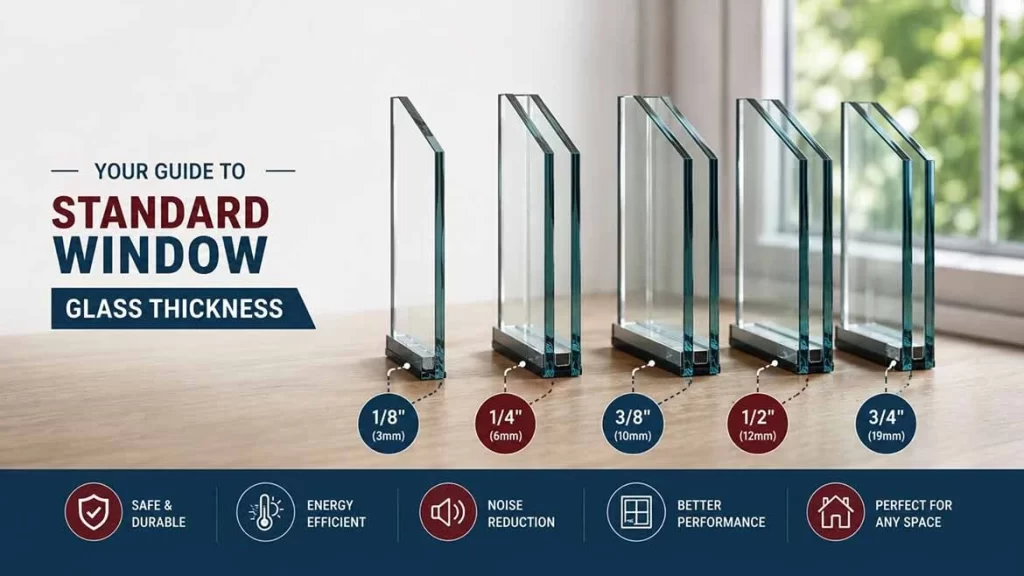
When trying to replace a cracked or damaged window, you might ask: What is the standard thickness of window glass?
In most residential applications, a glass of 3 mm to 4 mm thick is recommended. However, the thickness of the glass varies according to the window type and application. The final decision depends on the window’s size, design, number of panes, glass type, safety requirements, and how the window is used.
So should you simply opt for thicker glass? Not quite, as understanding the standard window glass thickness can help you decide better when comparing replacement glass options for your home or business. In this blog, we will cover the various aspects of glass when it comes to considering your window glass thickness.
| Get professional window glass replacement and repair in Sacramento – Call (916)-944-7179 |
What is Considered the Standard Thickness of Window Glass?
Most experts recommend glass that is about 3-4 mm thick per pane, which is approximately 1/8 to 5/32 inch. However, other thicknesses are considered for much larger windows, specialty glazing, and commercial applications where specific performance characteristics are required.
But it is important to know that glass thickness is only one factor in choosing the right window glass. You also have to consider other factors such as glass type, coatings, window size, frame, safety requirements, and installation.
What Are the Most Common Window Glass Thicknesses?
Window glass is measured in millimeters or fractions of an inch; here are the common thicknesses:
| Glass Thickness | Approximate Thickness in Inches | Typical Application |
| 3 mm | 1/8 inch | Common residential applications |
| 4 mm | 5/32 inch | Common residential glazing |
| 5 mm | 3/16 inch | Selected residential or specialty applications |
| 6 mm | 1/4 inch | Heavier-duty glazing |
| 8 mm | 5/16 inch | Specialty and commercial applications |
| 10 mm | 3/8 inch | Heavier commercial or specialty glazing |
| 12 mm | 1/2 inch | Selected commercial and specialty applications |
| Note: These are general thicknesses, not a universal recommendation for every window. |
How Thick Is Glass in a Standard Residential Window?
As mentioned previously, the individual pane of glass is about 3 mm to 4 mm thick. However, the thickness of the individual pane is different from the total thickness of the window unit.
-
Single-Pane Windows
This consists of a single piece of glass. The older windows have thinner glass; however, the exact thickness depends on the original window and application. The overall insulation in this window type is much less compared to the modern insulated glass units.
-
Double-Pane Windows
This glass type consists of two separate glass panes along with a sealed space between them. Each pane is about 3 mm to 4 mm thick, and the space adds to the overall thickness of the insulated glass unit.
This space is filled with either an insulating gas such as argon or air, and the performance of insulation is derived from the entire window system and not just a single pane.
-
Triple-Pane Windows
When comparing window glass, don’t confuse pane thickness with overall window-unit thickness.
This window type comprises three glass panes and two insulating spaces. Here, each pane is not as thick as the panes used in double-pane windows, as the additional pane and the insulating space provide an extra barrier against heat transfer.
Does Thicker Window Glass Mean Better Quality?
Not necessarily; the following are the other important factors to consider:
- Number of panes
- Glass type
- Glass size
- Gas fills
- Spacer systems
- Installation quality
- Frame material
- Window design
- Low-E coatings
So, when considering window glass replacement, be sure to ask about the overall glass and window configuration instead of simply opting for the thickest pane available.
What Factors Determine the Right Glass Thickness?
Here are the main factors that determine the perfect glass thickness:
1. Window Size
The glass specifications of larger panes are different from those of smaller windows, as the former are more exposed.
2. Glass Type
Each glass type has its own characteristics: Tempered, laminated, annealed, and others; however, the perfect type depends on the main function of the glass.
3. Window Design
Each design has its own glazing requirements: Picture windows, sliding windows, single-hung windows, double-hung windows, and casement windows.
4. Safety Requirements
Selecting the right type of glass is just as important as selecting the right thickness, as some locations require safety glazing.
5. Number of Panes
The configuration and performance differ according to single-, double-, and triple-pane windows.
6. Installation and Frame
If the installation is not appropriate for the glass system, even the most efficient glass will not perform as expected.
Glass Thickness Vs. Window-Unit Thickness
Here are the main differences between the two:
| Aspect | Glass Thickness | Window-Unit Thickness |
| What it means | The thickness of an individual pane of glass. | The overall thickness of an insulated glass unit (IGU), including the glass panes and the sealed space between them. |
| Example | One pane may be 3 mm thick. | A double-pane unit may contain two 3 mm panes separated by a spacer, making the complete unit thicker than either pane. |
| What it tells you | The thickness of each glass pane. | The total thickness of the assembled insulated glass unit. |
| Why it matters | Helps determine the correct replacement glass specification. | Helps ensure the replacement unit fits properly within the existing window frame. |
| Ordering replacement glass | Should not be estimated solely by looking at the glass. | The complete unit’s dimensions and configuration should be properly measured before ordering. |
| Professional recommendation | A professional can identify the appropriate glass thickness and specification. | A professional can determine the correct overall dimensions, configuration, and unit thickness for the existing window. |
How Does Glass Thickness Affect Energy Efficiency, Noise Reduction, and Glass Selection?
Here is a simple breakdown:
1. Glass Thickness and Energy Efficiency
The glass thickness is not the main factor in determining energy efficiency. You need to consider the complete window system: low-E coatings, double or triple glazing, insulating gas fills, frame construction, quality spacers, proper seals, and correct installation.
2. Glass Thickness and Noise Reduction
The overall window construction also plays a major role, including the number of panes, air spaces, glass type, laminated layers, frame, and seals. In the case of traffic noise, laminated glass or an insulated glass unit is recommended rather than simply selecting a thicker pane.
3. When Thicker or Specialty Glass Is Necessary
In case the window has a certain specific structure, performance, or safety requirement, then specially treated glass is recommended. The requirements for large glass panels are different from those for standard residential windows. In contrast, commercial glazing, such as curtain walls, office windows, storefronts, and internal partitions, requires additional safety and structural requirements.
Specialty applications are needed in partitions, doors, large openings, and custom installations. Overall, the right specification should be determined by the application rather than simply by the thickness of the glass.
What Glass Thickness Is Used for Commercial Windows?
As commercial glass does not have a universal thickness, you also need to consider the project where the commercial glazing can be used, along with the thickness and configuration of the glass. This depends on:
- Glass size
- Storefront or curtain-wall design
- Glass type
- Wind and structural requirements
- Safety glazing requirements
- Framing system
- Building requirements
- Intended use
For that reason, commercial glass installation projects need to be analyzed according to specific building and glazing systems instead of just the generic thickness chart.
Glass Replacement: When and Where To Consider?
Here is a look at the manner and location when you need to consider glass replacement:
Only the Glass Instead of the Entire Window
This is possible when:
- A cracked or broken pane
- Damaged glass with an otherwise functional frame
- A failed glass unit
- Fogging between insulated glass panes
- A window that does not need a complete system upgrade
When Should You Replace the Entire Window
Replacement is the best solution when:
- The frame is damaged or warped.
- You want to upgrade the entire window system.
- The window is difficult to operate.
- Multiple parts of the window are failing.
- The frame has significant air leakage.
- The existing window is outdated and inefficient.
If you are not sure whether you need glass replacement or complete window replacement, have the existing window inspected by a professional to get accurate suggestions.
| For Professional Glass Inspection And Solution – Call (916)-944-7179 |
Common Queries From Our Clients
➢ Does window glass thickness affect energy efficiency?
No, thickness alone is not a determining factor. The other factors to consider include number of panes, Low-E coatings, gas fills, spacers, frame construction, seals, and installation, all of which contribute to window energy performance.
➢ Can I replace only the glass in my window?
If the existing frame is in good condition, then replacing just the failed or damaged glass is the right option. Complete replacement is recommended if the frame is damaged or the entire window system is outdated.
➢ How do I know what thickness replacement glass I need?
Get your existing window evaluated by a licensed professional for thickness, type, configuration, and dimensions for best results.
➢ What glass thickness is best for commercial windows?
In the case of commercial glass, various aspects need to be considered, such as size and design of the glazing, safety requirements, structural considerations, framing system, and intended use.
Final Thoughts
Selecting the right kind of glass replacement is more than simply selecting the thickest pane. The perfect solution depends on various aspects such as the condition of your existing windows, the requirements of the application, and the performance you need.
Also, you might need to consider weather conditions, outside noise buffering, and safety as part of your final choice. For best results, it is recommended to get a professional to inspect your existing glass and advise you on your options accordingly. Be sure to contact a professional glass service company, as window glass is an investment and you need to be smart about it.
Read More About:
- How to Fix a Minor Crack or Chip in a Glass Pane (DIY Tips)
- Why Does Your Window Glass Look Wavy or Distorted?
- How To Temporarily Fix A Broken Glass Window Until The Repair Crew Arrives
- The Ultimate Guide to Glass Table Tops: Types, Styles, Safety, DIY, and Buying Tips
Get Your Window Glass Replaced in Sacramento With Central Glass Inc.
Need to replace a cracked, broken, or foggy window in Sacramento? Central Glass Inc. is here to help.
Central Glass Inc. is a reputable name when it comes to residential and commercial glass replacement services. The company has been in service since 1972 and is known for providing window and sliding glass door repair and replacement and commercial glass installation solutions. Our licensed team (#1037547) can help you choose the right glass chamber and ensure it fits your existing window properly.
Whether you need residential glass replacement, commercial glass replacement, or window glass installation in Sacramento, Central Glass can help analyze your glass needs and determine the perfect solution.
Call Central Glass Inc. at (916) 944 -7179 for a free phone estimate, and our experts will guide you.