

How Low-E Glass Works and Why It Matters for Window Glass Repair
Did you know that heat moving through your glass could be costing you more money every single month? Windows on a hot afternoon can feel like standing next to a heater.
Likewise, in winter, you may feel a cold draft even when the windows are closed. This is where low-E glass comes into the picture, with the “E” standing for “emissivity.”
Low-E glass is one of the smartest innovations in window glass technology. In this blog, we will explain how low-E glass works, how it makes a difference in your home, and what you need to know if you need to repair or replace glass with a special coating.
| Professional Low-E Glass Window Repairs, Replacement, and Installation – Call 916-944-7179 |
What Is Low-E Glass and How Does It Work?
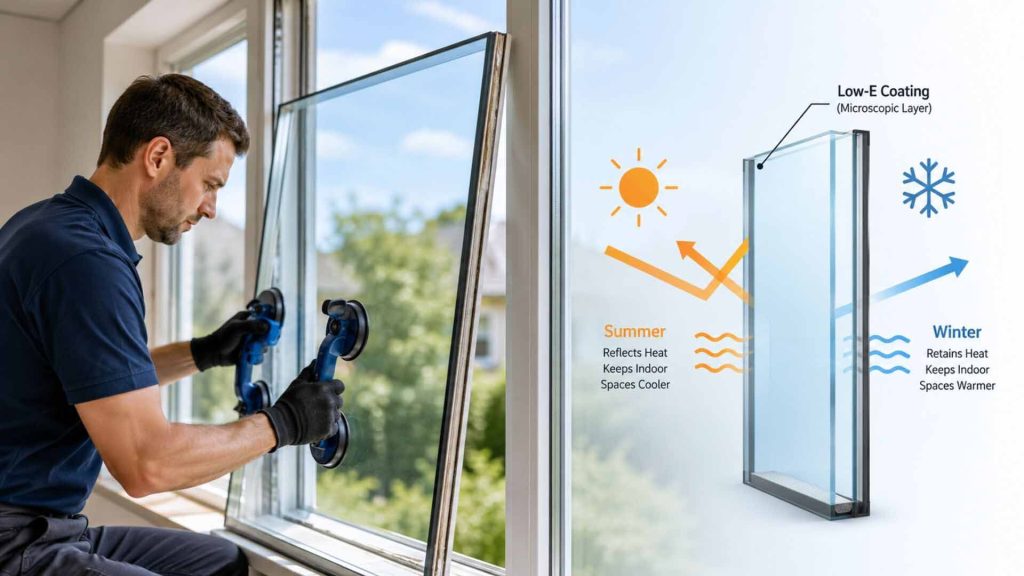
Low-E, or low-emissivity glass, is standard glass coated with a microscopically thin layer of metallic oxides and silver, about 500 times thinner than a human hair.
This coating works like a thermal mirror. It allows natural light to pass through and controls how heat energy moves. The low-E coating reduces emissivity to as low as 0.02, compared with the high emissivity of about 0.84 for uncoated glass.
How does it function?
Standard windows allow more heat to pass through, resulting in overheating during summer and significant heat loss during winter, as indoor warmth tends to escape through the cold glass.
But low-E glass helps control this dynamic by reflecting infrared heat toward its source:
- In summer, it reflects solar heat away from your building, helping keep indoor spaces cooler.
- In winter, it reflects indoor heat back into the room, helping keep you warmer.
Also, low-E glass can block a lot of harmful UV rays. This protection helps prevent fading of flooring, curtains, furniture, and other interior materials. This is especially important for homeowners who want to protect their interiors from fading and discoloration caused by prolonged sun exposure.
The Two Main Types of Low-E Coatings
Not all low-E glass is the same. Here are the two primary types of coatings:
| Feature / Detail | Soft Coat Low-E Glass | Hard Coat Low-E Glass |
| Also Known As | Sputter-coated Low-E | Pyrolytic coating |
| Application Process | Applied via magnetron sputter vacuum deposition | Bonded/baked directly onto the glass surface during manufacturing |
| Energy & Solar Performance | Superior; offers excellent solar control and very low emissivity | Good, but it does not offer the same level of energy performance as the soft coat |
| Durability & Sensitivity | More delicate; must be sealed inside an insulating glass unit (IGU) to protect against air and moisture | Much more durable, scratch-resistant, and forgiving if the glass surface is exposed |
| Risk Factor | If the window seal fails, the coating can oxidize and become damaged | Resistant to oxidation and damage from surface exposure |
| Common Uses | Standard in modern double-pane and triple-pane windows | Can be used in single-pane windows |
| Regional Recommendation | Best choice for homeowners. It provides strong solar control during hot summers while helping retain indoor heat during cold winters. | Less common for regions where maximum energy efficiency is required |
How Low-E Glass Affects Window Glass Repair
Customers who need residential glass repair or commercial glass work need to understand that repairing low-E glass is different from repairing ordinary glass.
Usually, when low-E glass gets damaged, the entire pane needs to be replaced. And the new glass needs to have the same low-E coating and insulating properties to maintain the energy efficiency of your window.
Seal failure is yet another common issue. In double-pane windows with low-E glass, the space between the panes is often filled with argon gas for added insulation. Once the seal fails, moisture can get in, causing the glass to appear foggy. The insulating performance of the unit can also decline. In such a case, the insulated glass unit usually needs to be replaced entirely.
Several homeowners assume that they can add a low-E coating to their existing glass. But this is generally not possible, as low-E coatings are applied during manufacturing or in specialized facilities. To get the maximum benefits of low-E glass, you usually need to replace the glass entirely.
For this, it is recommended to work with a professional glass company. Experts can help you understand your options and make sure that the replaced glass matches the performance of your original windows.
Common Questions About Low-E Glass Repair
➢ Can you repair a scratch on Low-E glass?
No, low-E glass is generally not repairable once the glass itself is damaged. You will need a professional for a quick glass replacement service.
➢ Can you clean Low-E glass like regular glass?
Yes, but you need to do this using only a soft, non-abrasive material and avoid harsh chemicals, scraping tools, or rough sponges, as they can damage the glass or coating. If the low-E coating is on an interior surface between the panes, it is protected, so you do not have to worry about cleaning it directly. However, for single-pane hard-coat low-E glass, gentle cleaning is advised.
➢ Is Low-E glass worth the extra cost?
Yes,low-E glass can be worth the extra cost because it helps reduce heat transfer compared with standard glass.
The upfront cost is higher. But you can save on heating and cooling bills in the long term. Additional benefits include improved indoor comfort and UV protection.
➢ How can you tell if your glass has a low-E coating?
Here’s what you need to do to understand if your glass has a low-E coating –
• Look at the glass from a slight angle; you may notice a slight bluish or greenish tint that regular glass does not have.
• Hold a lit match or penlight in front of the window. If you see four reflected images and one appears a different color from the others, it may indicate the presence of a low-E coating.
| Get Low-E Glass Window Repair, Replacement, and Installation At Affordable Rates. Call 916-944-7179 |
Final Thoughts
Low-E glass is a major advancement in window glass technology, as it helps improve the energy performance of your property. Whether you own a home or run a business, understanding how low-E glass works can help you make better decisions about your windows.
When it comes to repair or replacement issues, you will need to get in touch with a professional glass repair company with expertise in this area. While this might be more expensive initially, it can help you save on your energy bills in the long term. It can also help protect your interiors from the harmful UV rays.
Read More About:
- How to Fix a Minor Crack or Chip in a Glass Pane (DIY Tips)
- Why Does Your Window Glass Look Wavy or Distorted?
- How To Temporarily Fix A Broken Glass Window Until The Repair Crew Arrives
- The Ultimate Guide to Glass Table Tops: Types, Styles, Safety, DIY, and Buying Tips
Get Low-E Glass Windows Repair and Replacement from Central Glass Inc.
When damaged or outdated glass is making your home less comfortable or increasing your energy costs, you want a local glass company in Sacramento you can rely on. For over 54 years, our YGRENE-certified company, Central Glass Inc., has provided professional window glass repair, residential glass repair, and commercial glass repair in Sacramento, helping you find the right solution for your property.
Our services include window and sliding glass door repair and replacement, mirror installation, tabletop services, and commercial glass installation. If replacement is the right option, we can help you explore Low-E glass for better energy efficiency, improved indoor comfort, UV protection, and long-term value.
Don’t let damaged or inefficient glass compromise the comfort of your home or business. Call us at 916-944-7179.